Deep Dish Dungeon Review: No-Map Survival Verdict
A Deep Dish Dungeon review of no-map exploration, cooking, three-player co-op, the early 76% Steam score, and the $12.74 launch price.
What the Launch Actually Confirms
A dungeon that will not draw your route is either the fun or the frustration, and that split is the whole point of a Deep Dish Dungeon review this week. The game launched on October 13, 2026, the intro discount ends on October 27, and the Steam score is still a one-day sample, so the buy-or-wait call is time-sensitive. This Deep Dish Dungeon review uses the store page plus limited-build player experience, and it labels every gap as unknown instead of guessing.
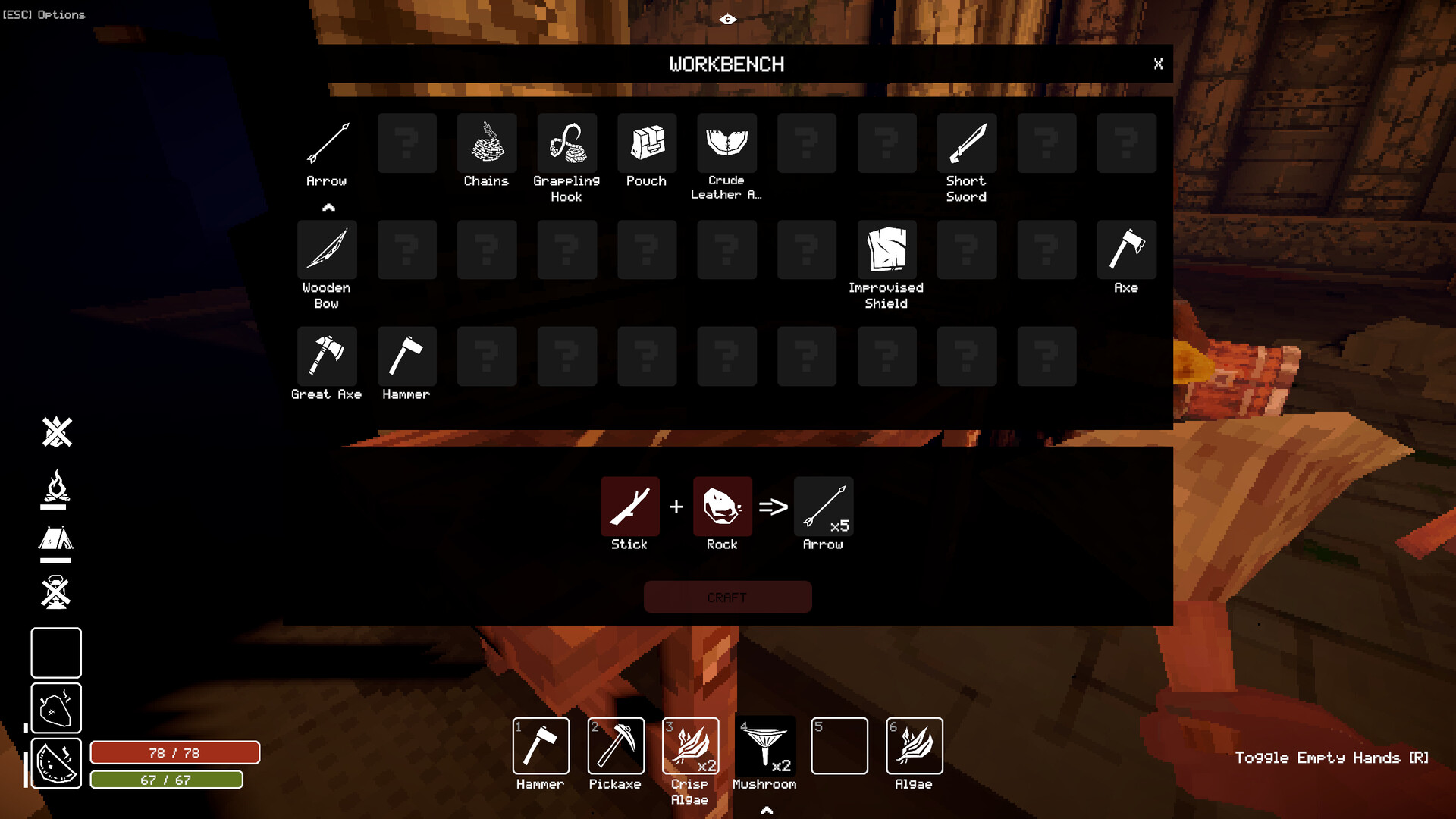
Official screenshot · Source: Steam store
Behold Studios developed it and Raw Fury published it. The store pitch is a survival game about exploring one hand-built, puzzle-heavy dungeon, with metroidvania ideas and crafting mixed in. You can go alone or bring up to two friends. That is a party of three, not a raid.
The useful split is simple. Official text covers the structure: atmospheric rooms, resource runs back to a camp, tools, meals, puzzles, and cooperative play. Player experience, from a creator who said the footage was a limited and partly older build, covers how that can feel: no compass, stiff-looking fights, and a small pack. Where those sources do not meet, this article leaves the point open.
| Fact | Detail |
|---|---|
| Launch | October 13, 2026 |
| Developer / publisher | Behold Studios / Raw Fury |
| Steam user score on Oct 14, 2026 | Mostly Positive, 76% of 114 reviews |
| Price that day | $14.99 list, $12.74 intro offer through October 27 |
| Party size | Solo, or you plus up to two friends |
| Listed features | Single-player, online co-op, cross-platform multiplayer, achievements, Steam Cloud, Family Sharing |
| Install size | 2 GB |
| Store genres | Action, Strategy |
A useful Deep Dish Dungeon review separates store copy from user tags. Players have tagged it as an action roguelike, survival horror, and a magic game, along with dungeon crawler, cooking, and metroidvania. The developer text stresses one crafted dungeon, puzzles, crafting, and co-op. Tags help shoppers search. They are not proof of permadeath runs, a spell list, or a particular scare level. HOLD: magic abilities, horror intensity, and any run-reset rules.
Language support is clearer than the tags. Steam marks interface and subtitles for 11 languages: English, Brazilian Portuguese, French, German, Spanish from Spain, Japanese, Polish, Russian, Simplified Chinese, Latin American Spanish, and Traditional Chinese. The same table does not mark full audio for any of them. If you need voiced dialogue, do not assume it is there.
| Language support | What the Steam table shows |
|---|---|
| Interface | Checked for all 11 languages above |
| Subtitles | Checked for the same 11 |
| Full audio | Not checked for any listed language |
Forty-three curators are listed, but the collected page has no curator scores or quotes. An awards area is present, and the collected text names no award. HOLD: curator consensus and any awards.
Exploration Without a Map
The strongest case in this Deep Dish Dungeon review is the dungeon itself. Official copy and player experience agree on the fantasy: a large underground space of corridors, rooms, secrets, and shortcuts, explored without the game pointing at the next door.
Player experience is specific. There is no map, no compass, and no marker telling you where to go. See something interesting in the distance, and you have to find the route. The developer disclaimer matches that tone. A very small team built the game to be played without hand-holding. You may feel stuck. The suggested response is a slower pace and attention to the room, alone or with other people online. That is a design choice, not a missing feature you should expect a patch to undo.
It also sits in tension with the metroidvania label. Many games in that family hand you a map that fills in as you walk. Here, the "map" is supposed to live in your memory, with shortcuts eventually tying rooms together. Player experience calls that the appeal: getting lost, finding a way through, and recognizing a path on the return trip. If that sounds rude rather than exciting, the rest of the feature list will not fix it. A demo is on the store page. Use it before you spend money on a mood you already dislike.
Reported interactions are physical, not menu puzzles. All of the row-level examples below are player experience from a limited build. The official page supports the broader idea, puzzles and environmental secrets, without listing these objects.
| Situation | Reported interaction | Source status |
|---|---|---|
| Gap you cannot cross | Pick up a wooden plank and use it as a bridge | Player experience, limited build |
| Door or ledge above you | Stack crates to climb | Player experience, limited build |
| Lower area | Attach a rope and climb down | Player experience, limited build |
| Water in the way | Change the water level | Player experience, limited build |
| Spider webs | Burn them with a torch | Player experience, limited build |
| Place you want to revisit | Learn the route; no marker is provided | Player experience, consistent with the no-hand-holding note |
Shortcuts matter as much as the tricks. In that player account, the space is one handcrafted dungeon, not a stack of random floors, and connections let you link areas you already suffered through. That fits a metroidvania better than it fits the user tag "action roguelike." HOLD: the exact unlock order, and whether each shortcut is a carried tool or a permanent change to the dungeon.
Habits that follow from what is actually described:
- When you stall, look for movable objects before you look for a hint menu.
- Treat a distant landmark as a routing problem.
- Check corners. Player experience says secrets pay off, and the store page says patience is how the dungeon opens.
- In co-op, describe landmarks out loud. Official text frames co-op as sharing knowledge and looking after each other, not as a score attack.
- Do not plan your route around fast travel. HOLD: fast travel is unconfirmed either way.
What to expect in a first session
These steps mix the official loop with early-game player experience. They are expectations, not a solved path through the dungeon.
- Start under-equipped. Player experience describes a weak weapon and very few supplies.
- Pick up basic materials. That account names sticks, mushrooms, and scrap metal, plus whatever else the rooms offer.
- Bring goods back and set up camp: a fire, a workbench, better weapons, and a cooking spot are the early goals named by players.
- Eat before you pick a fight, once you have a meal. Official text says recipes change your stats. Player experience compares that to filling health and stamina before combat.
- If a gap, a height change, water, or webs stop you, try the interactions in the table above.
- Expect to feel lost. That is the intended pressure, according to both the disclaimer and player experience.
Camp, Crafting, and Food
Any honest Deep Dish Dungeon review has to treat cooking as a power system, not a flavor hobby. The store page is direct about the loop. You forage, you return to camp, you plan by the fire, you craft tools, and you cook. Meals are described as progress. Over time, new recipes affect your stats in different ways. The enigma of the place is the long-term goal; the camp is how you survive long enough to chase it.
Player experience adds a familiar comparison. If you have played Valheim, the creator says the meal logic will look recognizable: different foods raise health and stamina, and entering a fight on an empty stomach is a mistake. Later meals in that account include soups and stews. Those dish names are player experience, not a published cookbook. HOLD: exact ingredients, exact stat numbers, and the full recipe list.
| Step | What you do | Why it matters |
|---|---|---|
| Leave camp | Push out with weak early gear | Scarcity is the stated start; players describe a poor weapon and thin supplies |
| Scavenge | Carry wood, food items, scrap, and odd finds | The same haul feeds tools and meals |
| Solve the room | Use the environment, not a quest arrow | Official progress is puzzles, doors, and patience |
| Return | Craft, cook, and improve the campsite | The trip home is part of the loop, especially with a small pack |
| Go deeper | Spend the new meal and tool on the next stretch | Food and gear are how a blocked room becomes a route |
Two buying implications follow. If you like a comfort loop between dangerous rooms, the camp is the hook, even though it is a campsite inside one dungeon rather than an open-world town. If you hate walking loot home, listen to the inventory note before you buy. Player experience from an older build says the pack is very small early, so camp runs happen constantly. HOLD: whether launch-day inventory is larger, and whether storage upgrades remove that pressure.
Co-op does not turn the loop into a contest. The page says the mode is about connecting, sharing what you learned, and taking care of each other. A friend who remembers a corridor is a stand-in for the missing map. That is the clearest reason to bring people. HOLD: whether enemies, loot, or recipe unlocks change when more players are present. Also HOLD: whether "other online players" in the disclaimer means public matchmaking or only people you invite. Online co-op, cross-platform multiplayer, and in-game chat are listed. Consoles are not named in the collected requirements, which show Windows and macOS only. HOLD: any console version.
Combat and Inventory Limits
The shakiest part of a Deep Dish Dungeon review, today, is combat. The only detailed fight description available here is player experience, and the creator flagged the footage as a limited build. In that account you swing a sword at skeletons and other creatures, block with a shield, and manage stamina. Attacks looked like they had little impact. Enemies barely reacted. The creator said they would not play this game for the fights.
That warning is worth keeping, and it is not a launch verdict. Official text only says you learn to beat enemies with diverse behaviors, find treasures, and refuse to ignore hints. It does not describe hit reactions, animation weight, or how hard the fights are. HOLD: whether combat in the October 13, 2026 build still feels stiff.
Inventory sits in the same bucket. The small-pack complaint is tied to an older build. Fast travel was explicitly not confirmed. Treat both as open questions.
| Topic | What is safe to say | Status |
|---|---|---|
| Fight tools seen | Sword swings, shield blocks, stamina limits, skeletons and other creatures | Player experience, limited build |
| Hit feel | Low impact; enemies barely react | Player experience, limited build; not confirmed for launch |
| Enemy design | Diverse behaviors | Official |
| Early pack size | Very small; frequent returns to camp | Player experience, older build |
| Fast travel | Not confirmed either way | HOLD |
| Offline solo play | Broadband is required on the spec sheet; offline play is not explained | HOLD |
If weighty combat is why you buy dungeon crawlers, wait for impressions of the release build. If the maze, the camp, and the meals are why you are here, the combat caveat lowers the fantasy. It does not erase the part the sources actually agree on.
Price, Specs, and the Buy Decision
Price is where this Deep Dish Dungeon review gets practical. On October 14, 2026, those figures were on the Deep Dish Dungeon listing on Steam: an introductory 15 percent cut from $14.99 to $12.74, ending October 27. That is a short window, not a permanent sale.
Two bundles were also listed at $20.46 during that window. The SULFUR pairing was shown against a $35.98 reference price. The Deep YAP pairing was shown against $22.48. The page also mentions saving 10 percent on the bundle items, so the discount lines do not tell one clean story. Buy a bundle only if you already want the other game. This article does not review SULFUR or YAPYAP.
| Option | Shown price | Reference price | Notes |
|---|---|---|---|
| Deep Dish Dungeon alone | $12.74 | $14.99 | Intro offer ends October 27, 2026 |
| SULFUR bundle | $20.46 | $35.98 | Worth it only if you want both |
| Deep YAP bundle | $20.46 | $22.48 | Smaller gap versus the reference price |
The early user score is Mostly Positive, 76 percent of 114 reviews. That is about three positive reviews for every one that is not, on a sample that is still one day old. A single rough evening can move a percentage built on barely over a hundred votes. Use it as an early signal, not a final grade. HOLD: median playtime and how long a full clear takes. Nothing in the sources supports an hour count.
How to read the hardware line
The recommended GPU class is an Nvidia GTX 580 or an AMD HD 7870, cards from the early 2010s, or anything newer. Combined with a 2 GB install, that means a lot of older gaming PCs clear the printed bar. The odd line is network: broadband is listed for minimum and recommended, on Windows and macOS, even though solo play exists. Do not assume you can play with the network cable pulled. HOLD: offline mode. macOS is listed, but the scraped requirements do not give a macOS version number. HOLD: the minimum macOS release.
| Spec | Minimum | Recommended |
|---|---|---|
| OS | Windows 10 or 11, 64-bit; macOS with no version number in the scrape | Same pattern, stronger CPU and GPU |
| CPU | Intel Core i3 or better | Intel Core i5 or better |
| Memory | 8 GB RAM | 16 GB RAM |
| Graphics | DirectX 9 shader model 3.0, or DirectX 11 feature level 9.3 | GTX 580 or HD 7870 class, or newer |
| Storage | 2 GB | 2 GB |
| Network | Broadband | Broadband |
Taken together, this Deep Dish Dungeon review lands on a conditional yes for explorers and a wait for combat-first players. Around fifteen dollars, even before the short discount, the price matches a focused dungeon from a small team, not a live-service platform. The score is too young to worship. The best documented parts are the ones the game refuses to explain for you.
- Buy during the intro window if a hand-built maze, stat-changing meals, and getting lost sound like the product you want. The no-map design is the product.
- Buy it with one or two friends if you want shared memory of the layout. Cross-platform multiplayer is listed between the platforms the page actually specs.
- Try the demo if you are unsure. Feeling stuck is an intended mood, per the developer.
- Wait if you need impactful combat, a map, confirmed fast travel, or a review sample bigger than day-one noise.
- Skip if you need guided quests. Nothing in the official pitch says that style is waiting as a toggle.
Deep Dish Dungeon Review FAQ
Is the $12.74 intro price worth paying before October 27?
Yes, if you want no-map exploration, a camp you improve, and meals that change your stats. No, if you want combat-first action or constant guidance. After October 27, 2026, the listed price goes back to $14.99 unless a later sale replaces this one. The discount is not large enough to rescue a bad fit.
Does the game include a map or fast travel?
Player experience says there is no map, no compass, and no destination marker, and the developer tells you to explore without hand-holding. Fast travel is not confirmed. HOLD until a source on the release build says otherwise. Plan on learning routes and using shortcuts.
Can three people play together?
Yes. Official text says you can play solo or with up to two friends, which is three people. Co-op is described as sharing knowledge and taking care of each other, not competing. Online co-op, cross-platform multiplayer, and in-game chat are listed. HOLD: public matchmaking versus invite-only groups, and any console support.
Does this Deep Dish Dungeon review recommend it as a roguelike?
No. A user tag says action roguelike, but the developer describes one hand-crafted dungeon with puzzles, shortcuts, crafting, and cooking. Buy it for exploration and survival logistics. Do not buy it for documented run-based resets, because that structure is not in the sources.
Related Guides
Deep Dish Dungeon guide: Demo Craft and Routes
Practical Deep Dish Dungeon guide for the Steam demo: materials, cooking, tools, enemies, and which Prison Key steps are still unconfirmed.
Deep Dish Dungeon Animal Hide: What the Demo Shows
What players can verify about Deep Dish Dungeon animal hide, including the demo item list, leather split, and iron-rod traps.
Deep Dish Dungeon cant play with friends: Co-Op Limit
Deep Dish Dungeon cant play with friends usually means the co-op cap: you plus three friends. Here is what is confirmed, and what is still unknown.
Deep Dish Dungeon Steam: Price, Sale, and Specs
See the Deep Dish Dungeon Steam price, Oct 27 sale, co-op size, Mostly Positive score, and PC specs before you buy.
Deep Dish Dungeon Demo: Playtime, Reviews, Tips
The Deep Dish Dungeon demo is a free ~1-hour Steam slice: co-op for three, crafting, no traditional saves, and Very Positive reviews.